
Penalty Kick Wiz Guide: Win Both Ends of the Twelve Yards
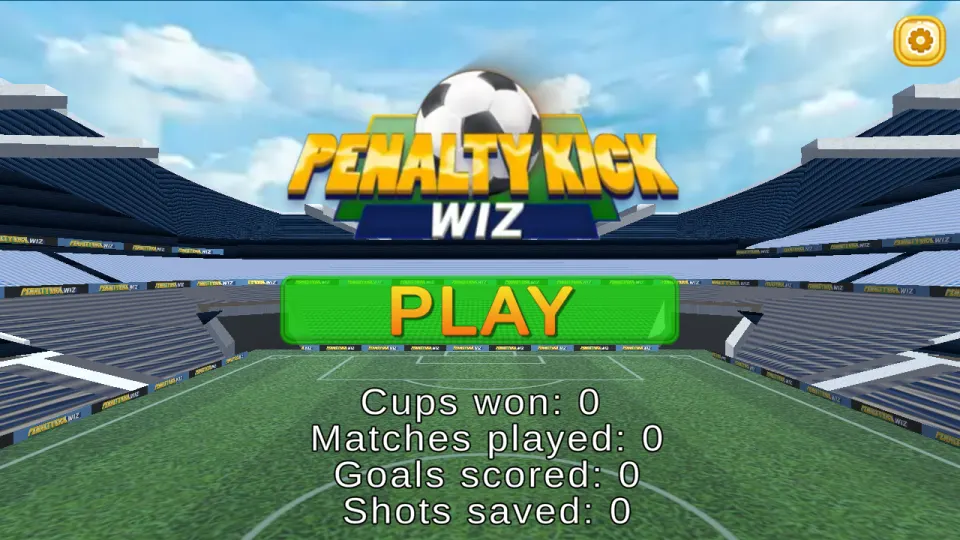 Click to play — free via gamemonetize
 Vary your corners on purpose — any three-shot pattern is a gift to the keeper. Prefer a well-placed medium-power shot to a rocket aimed anywhere. In goal, read the run-up angle before the ball moves, and once you choose a dive, commit completely: hesitant keepers lose to everything.
Penalty Kick Wiz compresses soccer into its cruellest twelve yards: you against a keeper who studies you, then the roles reversed with you in the gloves. Every kick is a small war of nerve — choose a corner, choose a power, and live with the geometry — and every save attempt is the same war from the other trench.
Because the game alternates shooting and keeping, winning means mastering both ends, and they reward opposite mindsets: shooting is a lying contest, goalkeeping is a reading contest. This guide covers both — corner discipline and power control in your boots, run-up reading and dive commitment in your hands.
A penalty is a conversation
Strip the stadium dressing and every kick here is a two-person bluffing game played with geometry. The keeper is not a wall; it is an opponent building a model of your habits — which corners you favor, what you do under pressure, whether your nerve survives a saved shot. That model is your real opponent, more than the dive itself. So the first mental shift is from aiming to communicating: every shot you take teaches the keeper something, and your job is to teach lies. Feed it a left-side bias for two kicks, then go right at the moment it trusts the pattern. Players who think this way stop asking 'where do I shoot?' and start asking 'what does the keeper believe right now?' — which is the only question a penalty ever really asks.
The three-shot pattern is the cardinal sin
If you keep one habit from this guide, keep this one: never let your last three shots share a corner, a power level and a body lean, because that is precisely the sample a competent keeper needs to sit on your next kick. Variation has to be deliberate, not occasional — deciding to 'mix it up' after a goal is exactly how accidental patterns form, since comfort under pressure pulls everyone toward their favorite corner. Build the variety into your routine instead: cycle through a mental deck of placements (left low, right high, center-adjacent, and back), and let power ride along as a second dimension of the lie. Deliberate variety costs nothing on any individual shot and compounds into an unreadable dossier. The keeper facing genuine randomness has to guess; the keeper facing a pattern does not have to guess at all.
Power is a trade, not a slider
Maximum-power shots feel correct and score rarely, because power purchases speed with precision — the rocket aimed at a corner becomes the rocket aimed anywhere, and an anywhere shot is exactly what keepers eat. The placed medium shot is the professional default: quick enough that a wrong-way dive cannot recover, accurate enough that a right-way dive struggles to reach, and forgiving of the small aiming errors adrenaline injects. Save genuine power for the specific moments it beats its costs — deep into a shootout when keepers commit earlier and faster, or against keepers who have already shown they reach placed shots comfortably. The discipline is accepting that a penalty struck at eighty percent power into the right spot outperforms a hundred percent shot into the crowd, every single time it is offered.
In goal: the run-up tells you everything
Shooting and saving run on opposite information, and the keeper's edge arrives before the ball moves: the run-up. Angle, speed and body shape during the approach correlate hard with placement — hips and plant foot rarely lie about which way a shot is going, and rushed run-ups tend to pair with rushed, readable shots. Build the habit of a still, watching first beat: eyes on the approach rather than the ball, forming a read, then moving as the strike happens. You will be wrong sometimes, and that is fine — the arithmetic of goalkeeping favors decisive errors over correct hesitations, because a wrong dive still covers its whole side while a late dive covers none. Keepers who guess deliberately, from evidence, save far more penalties than keepers waiting for certainty that by definition arrives too late.
Commitment: the virtue of both roles
The same commandment governs both sides of the twelve yards: commit fully, because half-decisions lose everywhere. As a shooter, the fatal move is changing your placement mid-run-up after a glance at the keeper — aborted plans produce the tamest shots in the game, drifting to the keeper's exact center. Pick your corner from the conversation you have built, and strike it as if the keeper were blind. As a keeper, the fatal move is the split dive — a half-commitment to one side that arrives nowhere, covers nothing, and turns even a correct read into a conceded goal. This game's shootouts punish hesitation symmetrically, which is the quiet lesson inside the fun: penalties are decided by nerve expressed as decision speed, in both directions, every single kick.
Managing the shootout arc
Because you live both roles, momentum management becomes a real skill. The psychological current flows against whoever just failed: a keeper who has just been beaten doubts their reads, and a shooter who has just been saved doubts their corners — and your next action usually comes in the opposite role, fresh doubt meeting a fresh job. Use the transition deliberately: one breath between roles, one short sentence of plan ('read the run-up' or 'far corner, medium power'), then total commitment to it. Scoreboard awareness matters too — trailing players should hunt variance with earlier, bolder dives and tighter corner targeting, while leaders play the percentage game. The shootout is a sprint made of moments; the player who manages their own nerve between moments collects the ones that matter.
Practice loops that transfer
Improvement here is a note-taking sport. Keep a running tally of your own tendencies — which corner you favor when nervous, what power you default to when tired — because that dossier is exactly what your opponents build from the other side, and self-knowledge is the cheapest way to patch the leaks. Structure practice in loops: ten kicks where the only goal is corner variety, ten where the only goal is identical run-ups regardless of placement, then a stretch in goal where the only goal is a committed dive on every read, wrong or not. One variable per loop, the way any aiming skill is actually trained. Players who practice everything at once improve in nothing; players who rotate single-focus loops for twenty minutes enter their next shootout carrying three quiet edges nobody can see.
FAQ
Do I play both the shooter and the goalkeeper?
What decides whether a penalty gets saved?
Is it reflexes or strategy?
Related guides
 1P
1P