
Basketball Legends Guide: Specials, Dunks and the Tournament Ladder
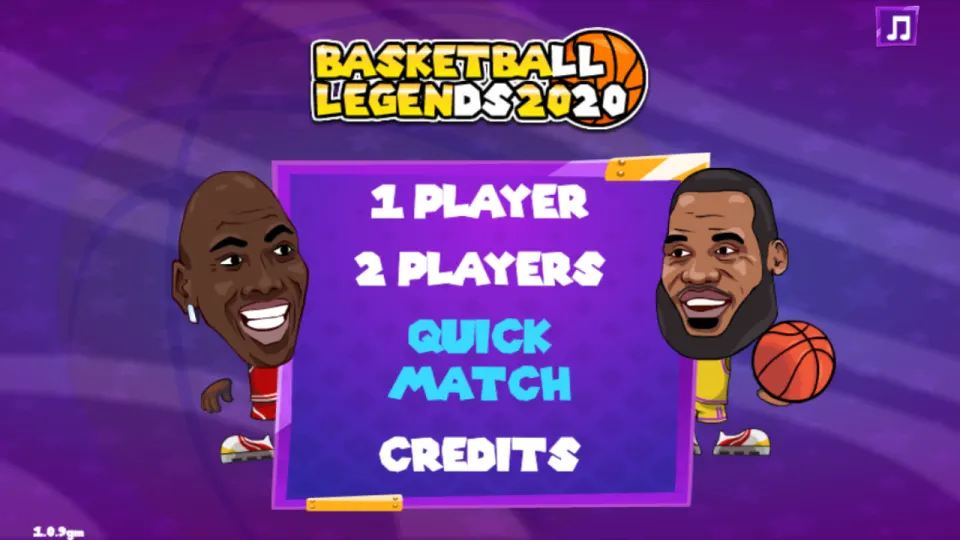 Click to play — free via gamemonetize
 Treat the special meter like a bank account: charge it through ordinary play and spend it when a close game hangs in the balance. Block with timing rather than height, favor mid-range shots against the CPU, and against a sprint-happy friend, fake a drive, then step back into the space they vacated.
Basketball Legends is street basketball with the showmanship turned up: MadPuffers' arcade branch of the family, the fullest two-player package in the browser — a complete tournament ladder against the CPU, quick matches against a friend on one keyboard, and a toolkit with real range: sprint, jump, slap, throw, dunk plus a special meter that can swing a game in three seconds.
Arcade does not mean shallow. The special economy, the block timing and the shot selection all have learnable structure, and this guide walks through it — what each verb on the keyboard is for, when to spend a special, and why the mid-range jumper quietly wins tournaments. Everything here applies in both solo ladders and couch duels.
Six verbs: what your buttons are for
Each player commands a full kit: movement, a jump, a slap for disrupting the ball, a throw for quick passes and shots, a dunk for rim attacks, and the special move once its meter is charged. On desktop, player one runs on WASD with an action cluster beside it, player two on the arrow keys with their own buttons; mobile mirrors everything with a joystick and action pads per side. The learning curve is really a vocabulary exercise — most beginners use three of the six verbs and ignore the rest. Spend one practice match deliberately naming each verb as you use it: sprint to separate from defenders, jump for rebounds and blocks, slap only at exposed balls, dunk only from position. Players who can name their tools start choosing them, and choosing beats mashing in every close game.
The special meter is a bank account
Specials charge while you play, and managing that charge is the deepest strategic layer in the game. The rookie mistake is spending them the moment the meter fills — a flashy dunk at 10-2 that changes nothing. The veteran pattern is banking: hold the charge through the middling stretches of a game and unleash it inside tight minutes, when a single highlight play breaks a tied score or stops an opponent's run. Timing matters as much as selection, because specials announce themselves and good defenders play them cautiously. The cleanest spends are transition moments — a steal or rebound that catches the defense scrambling — where the surprise multiplier is highest. Watch your meter the way you watch the score clock: both count down to the moments that decide close games.
Blocks are timing, not height
The block in this game obeys an arcade truth: a well-timed smaller jump erases more dunks than a panicked leap at the ball's apex ever will. Because jump height is fixed per player, what separates stoppers from spectators is when they leave the floor. The read is the offensive player's gather — the moment a driver plants both hands on the ball to rise. Jump as the gather happens and your contest meets the ball's launch; jump early and the dunker simply waits; jump late and you are a highlight in someone else's clip. Practice the read against the CPU's more aggressive drivers, where gathers are frequent and consequences cheap. Once the timing lives in your hands, rim protection stops being luck — and opponents start passing out of plays they used to finish over you.
Mid-range shots win tournaments
Against the CPU's tournament ladder, shot selection quietly decides how deep your run goes, and the analytics of this arcade say something counterintuitive: the in-between game is undervalued. The AI contests three-pointers with real urgency and bodies up at the rim for dunks, but it reacts later to pull-up floaters and short jumpers from twelve feet, which land with regularity. The ladder rewards consistency over highlight volume, so build your CPU offense around the shots the machine defends worst, then use threes and dunks as spices rather than the diet. Against human opponents the math changes — friends overplay their favorite shots and ignore yours — but the principle generalizes: find the shot your specific opponent concedes, and take it until they prove they can stop it.
Beating the sprint-happy friend
Couch rivals have a signature flaw: they sprint everywhere, on offense and defense, with the enthusiasm of someone who has just discovered the sprint button. Punish it with geometry. The reliable counter is the fake drive: take one hard dribble past their shoulder, and as they sprint to recover, stop, step back behind your momentum, and shoot into the space they vacated. Sprint-happy defenders cannot reverse direction instantly — that is the whole exploit — and each exploitation plants doubt that slows their feet further. Layer in mirror awareness too: whatever weapon you are drilling, assume your friend is drilling it as well. The player who resolves that symmetry first, trading the highlight attempt for the patient open look, banks the extra possessions that decide every close couch game ever played.
Legends or Stars: pick your basketball
MadPuffers built two sibling basketball games, and choosing correctly saves everyone an argument. Legends is the arcade branch: special meters, exaggerated dunk physics, a full tournament ladder, and an anything-goes energy that suits mixed-skill sessions — the specials hand weaker players comeback weapons, which keeps couch series alive. Stars is the purer duel, trimmed toward one-on-one fundamentals where shot meters, steals and defensive reads decide everything — better suited to players who want their basketball honest and their rival beaten fairly. The good news is that skills transfer: meter discipline helps in both, block timing is block timing, and the friend who learns fake drives here will attempt them there. Play Legends for the party, Stars for the exam.
Pacing a tournament run
The tournament ladder is a marathon of CPU opponents, and the runs that reach the final are paced, not sprinted. Treat the early rounds as calibration: use them to learn how this particular bracket contests shots, which of your verbs the AI punishes, and whether your in-between shot is calibrated for the day. Spend your experimentation on those soft matches — trying a new special timing or block read against round-one opposition costs little and pays off in the closing rounds, where the CPU's aggression climbs and bad habits stop being forgivable. Between matches, keep sessions short: arcade basketball punishes tired hands with rushed jump timing, and most ladder runs die in the semifinal to a fatigue miss, not a skill gap. Fresh hands for the final — the CPU will bring its best, and so should yours.
FAQ
How many players can play Basketball Legends?
Is it the same game as Basketball Stars?
Does it cost anything or work on mobile?
Related guides
 1P/2P
1P/2P