
Soccer Physics Tips: One Button, Two Floppers, Zero Shame
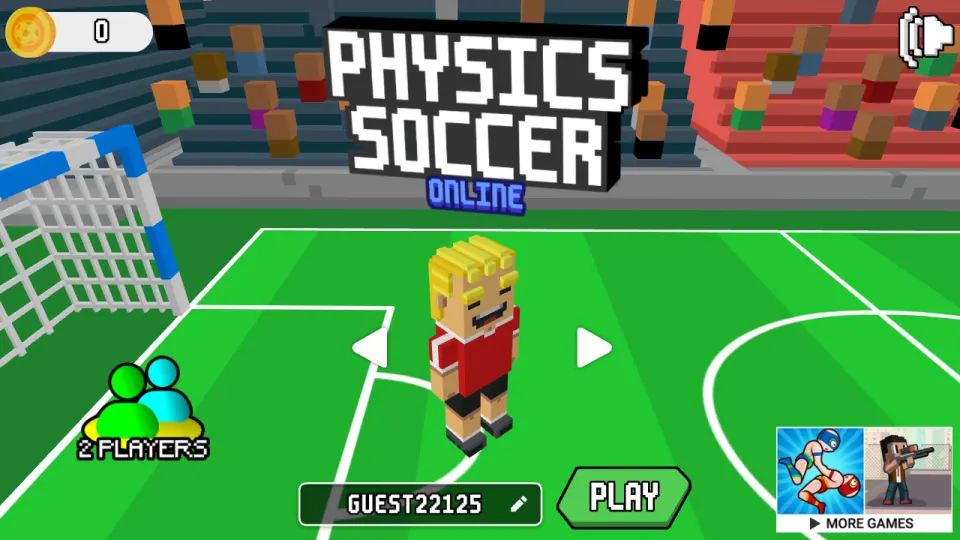 Click to play — free via gamemonetize
 Pulse your button in short, deliberate beats — every press makes your team jump and kick simultaneously, so timing beats enthusiasm. Guard the center, because keepers gift own goals constantly. If the ball settles on a player's head, walk it into the net instead of swinging at it. Against humans, copy their rhythm for a minute, then strike a half-beat off it.
Soccer Physics is football with the coaching stripped out: one button per team, two floppy players a side, and a 3D pitch where every press makes your whole squad leap and kick at once. It sounds like a lottery until you watch a good player — goals stop looking random and start looking engineered by someone who understands the game's few, strange laws.
Those laws are this guide. Whether you are sharing a keyboard with a friend, queueing an online opponent, or killing time against the computer, the same handful of ideas decide matches: what the jump-kick really commits you to, why most goals are own goals, and how the head-carry trick turns panic into points.
One button means every press is a decision
Most football games separate jumping from kicking; here the button fuses them. Every press launches your players upward with legs swinging, which means there is no defensive stance and no positional pass — only the question of when. New players press constantly and call it effort; the ball spends the match pinballing off their airborne bodies while real chances go to whoever stayed grounded. The upgrade is assigning a purpose to each press before it happens: contest the drop, clear the danger, or attack the bounce. Between presses, your players regroup on the ground, and that grounded pause is where positioning actually happens. Watch a decided match sometime and count presses: the winner usually presses less, not more, because every one of their presses arrived at a useful moment.
Own goals are the top scorer
The comedy engine of this game is also its deepest tactical truth: more goals come from flailing keepers and deflections than from clean strikes, and a huge share of those are own goals. Defending is therefore not about heroic clearances — it is about geometry. Station bodies in the shooting lanes between ball and goal, especially through the middle of the pitch, where most disasters originate. A grounded defender in the right square beats a spectacular leaping keeper every time, because the keeper's kick swing cannot aim. When the ball is loose in your box, resist the spectacular option and simply occupy space; the physics will do the rest. Matches swing on this alone: the side that concedes fewer gifts usually wins, regardless of who attacked better, because gifts are the most reliable supply of goals on the pitch.
The head carry: patience that scores
Every regular knows the moment: the ball settles on top of a player's head and sticks there, and both teams freeze while the carrier starts walking. This is not a glitch — it is an opportunity, and the game rewards the calm response. A walking head-carrier advances the ball at its own pace, and defenders who leap at it in a panic usually knock it loose the wrong way or take themselves out of the play entirely. The correct defense is containment: shadow the walker, stay grounded, and wait for the carrier to reach a desperate position or attempt a kick. The correct offense, if it is your head, is to keep walking toward goal and only kick when the geometry is undeniable. Champions of this game score a surprising share of their goals without ever swinging at the ball.
Your team moves as one block
Each button drives both of your players in unison — the pair leaps and kicks together — which reframes positioning entirely. You do not coordinate individuals; you place a block. When the block sits deep, both players defend; when it sits high, both attack; there is no in-between, so stop wishing for one. Use the block's two shapes deliberately: a grounded pair is a wall that deflects shots, an airborne pair is a scattergun that contests everything and controls nothing. Good players cycle between the two states — wall when danger approaches, scattergun when the ball hangs loose. The habit that loses matches is arriving late: because both players commit together, a mistimed press leaves the whole team in the air while the ball trundles into the space behind them. Timing the block, not steering it, is the skill.
Reading human rivals
The one-button format makes opponents legible: everyone settles into a press rhythm within a minute, and that rhythm is a scouting report. Spend the opening stretch of any human match doing nothing but cataloguing it — when they leap for drop balls, how early they press on defense, whether they panic when the ball sits on a head. Human matches here are decided by whoever breaks pattern second, not first: absorb the rhythm, then time your interventions a half-beat outside it, meeting the ball where their next press will not be. Online opponents bring one extra tell — impatience. Players who queue casually press far more than local rivals, and impatience in this game donates own goals. Let them press; collect the gifts; win the match quietly.
Solo mode is your physics classroom
The computer opponent is a genuinely useful sparring partner, not a placeholder — solo matches run at a pace that lets you test one idea at a time. Use them to calibrate the two feels this game lives on: how long a grounded pause lasts, and how much airtime a press really buys. Both are different from what your eyes assume, and both are cheaper to learn without a friend scoring off your mistakes. Give each solo session a single syllabus: one match practicing nothing but center defense, one practicing head-carries, one practicing press restraint. The comedy makes it tempting to treat solo mode as a joke, but the players who dominate couch matches are almost always the ones who learned the physics somewhere quiet first.
Couch setup that prevents controller rage
Shared-keyboard matches run on W for one player and the up arrow for the other, and the physical setup matters more than in most games because presses get frantic. Sit close enough that neither player's elbow intrudes on the other's key, and agree up front that mashing a rival's key cluster is a forfeit, not a tactic. Settle the match length before kickoff — first to five or first to ten, winner stays on — because rule arguments after an own goal have ended more sessions than any losing streak. And keep one house rule sacred: own goals get laughed at, never blamed. The whole appeal of this game is shared catastrophe, and a rival who sulks at the physics has missed the point of the sport entirely.
FAQ
How many players does Soccer Physics support?
Why do my players flail so uncontrollably?
Does it run on phones?
Related guides
 1P/2P
1P/2P