
Soccer Random Tips: How to Win on Grass, Ice and Beach
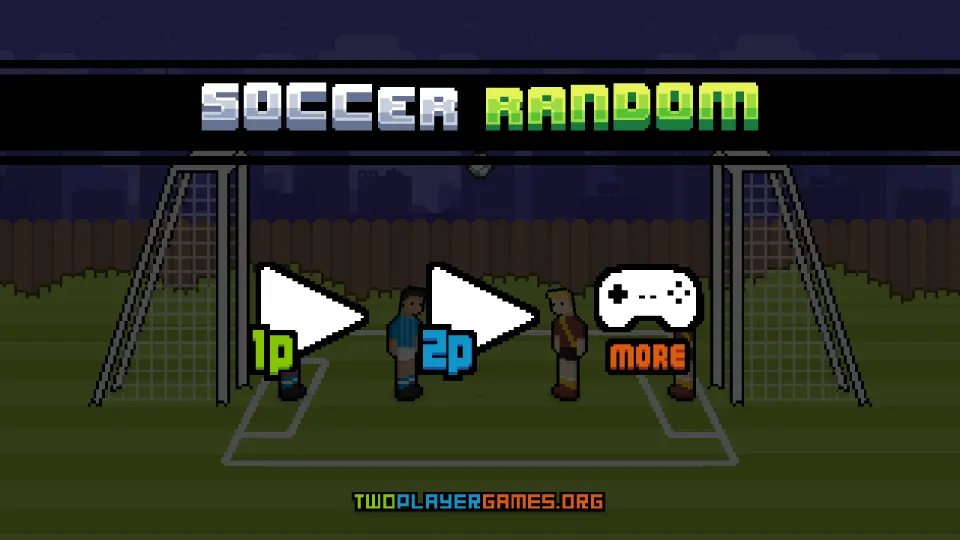 Click to play — free via gamemonetize
 Tap your button in short bursts instead of holding it, defend first on ice where attacks slip away, attack early on grass and beach where jumps bite, and watch the net size each round — smaller goals make patience worth more than shot volume.
Soccer Random gives each side one button, two flailing ragdoll footballers, and a pitch that refuses to sit still — grass becomes ice, ice becomes beach, and the goals themselves resize between rounds. It reads as a coin-flip simulator until you play against someone who knows the surfaces. Then it reads as a lesson.
The difference is surface discipline: each pitch has its own physics personality, and each rewards a different first instinct. This guide walks through all of them, plus the timing habits that carry across every round of a first-to-five match. Works the same against a friend on a shared keyboard or the computer in solo.
Tap, do not hold: the first commandment
Your button makes your whole two-man team hop, and the hop is a commitment — a big launch flattens your ragdolls for a full second on landing, exactly long enough to concede. Short, shallow taps keep your players upright, mobile and positioned, which is ninety percent of defense in this game. The players who lose are usually the ones treating it like a jumping game; it is closer to a standing game where the ball comes to you. Practice the discipline for one match: no press unless you can say why — meeting the ball, clearing it, or shooting. You will feel the difference by the second round, when your rival is still picking their footballers off the floor after every ambitious leap.
Ice rounds: defense is the cheat code
The ice pitch is where aggression goes to die. Every touch slides further than intended, attacking jumps carry your players past the ball, and the puck-like ball travels in long, uncatchable skids. Meanwhile a patient defender thrives: stand your ground in front of your goal, let the slippery pitch do your work, and absorb whatever arrives — blocks on ice need almost no precision because attacking momentum delivers the ball to you. The scoring recipe that does work is the counterattack: win the ball defensively, then nudge it forward with minimal touches and let your rival's sliding defense overcommit. On ice, the team that wants it less, wins. Wait for their mistake, punish the rebound, and get back to standing still.
Grass and beach: strike while the jumping is good
Regular grass and beach rounds are the opposite personality — friction works, hops land where planted, and the first team to attack with purpose usually draws first blood. Here your taps can be committed and your jumps ambitious, because a missed leap costs a beat rather than a goal. Hunt the high ball: pop your forward up to meet dropped balls at their peak and deflect them toward goal, where even a scrambled touch can sneak past the flailing keeper. Beach rounds add bounce to everything, so shots that look wide curve back in off the sandy rebound — shoot more there, not less. Learn which surface loaded during the round intro and set your aggression dial accordingly before the ball drops.
Watch the goal size before you plan shots
Round intros change more than the pitch — the nets themselves resize, and a round with shrunken goals is a completely different sport. Small goals make volume shooting useless: most attempts clatter off a post or the keeper's face and hand the rebound to chaos. The winning adjustment is patience — manufacture close-range looks by blocking passes and poaching rebounds, and take only shots from within a body length of the box. Big-goal rounds run the other way: distance heaves are live all of a sudden, and a tap from midfield can bounce in. The habit takes one second per round. Glance at the net, pick your shot diet, and you will never spend a round feeding a goalie's confidence.
Goal-mouth scrambles: assign a cleaner
Scrambles in front of your own net are how quick leads die — two ragdolls converge, everybody swings, and the ball pinballs somewhere terrible. The fix is pre-assigning roles in your head: the player nearest goal is the cleaner, whose only job is a well-timed clear jump that knocks the ball away from the mouth, while the other stays high as the outlet. What loses scrambles is a second attacker joining the pile; what wins them is one defender who refuses to swing early and times a single decisive touch. If your teammate — or your own better judgment — cannot resist piling in, at least clear toward the sidelines, never across the middle of your own box where the lurking striker lives.
The three-second read: adapt before you act
Every round begins with a new surface, new ball weight and possibly new net dimensions — and the team that spends those opening seconds adapting instead of sprinting usually controls the round. Build the ritual: surface, ball, goals, in that order, inside the first three seconds. Ice says defend and counter. Grass says press high. Beach says shoot early and often. Heavy ball says no distance shots. Small nets say patience. The ritual sounds slow but it runs faster than the panic of discovering the pitch is ice by falling over — and psychological edges compound in a first-to-five match, where opponents start dreading the rounds they cannot read as fast as you can.
Close it out without the collapse
At 4–2 the match is yours and precisely nobody believes it yet, because this game's random rounds manufacture comebacks out of nothing. The closeout discipline mirrors the ice rule: whatever the surface, play the percentage game — defend deep, touch the ball as little as possible, and make your rival generate two perfect goals instead of gifting one messy one. Chasing your own highlight reel at 4–2 is how 4–4 happens. And if you are the one climbing back from behind, hunt the surface lottery: you want chaotic rounds — beach bounces, small weird pitches — where a single lucky deflection gets you back in touch. Manage the arc, and the five-goal finish line takes care of itself.
FAQ
How do you win a match in Soccer Random?
Why does the field keep changing mid-match?
Does Soccer Random work on phones?
Related guides

 1P/2P
1P/2P