
Basketball Stars Tips: Master the Shot Meter, Steals and 1v1 Play
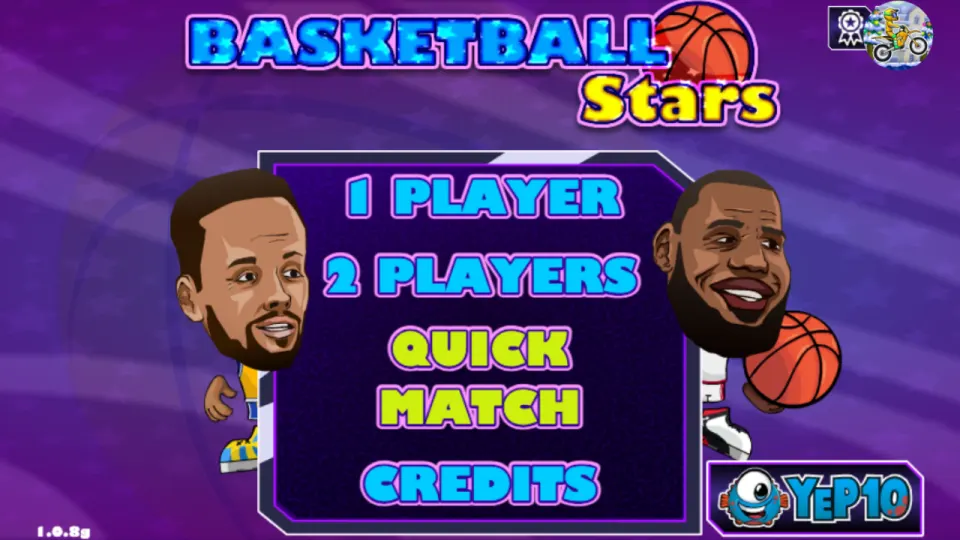 Click to play — free via gamemonetize
 Release shots at the peak of the meter and only from open looks. Steal only when the ball is exposed mid-dribble, because a missed slap strands you out of position. Save dunks for when your defender is trailing behind you — they beat blocks but get punished by steals.
Basketball Stars is a one-on-one duel dressed as an arcade game, and it has real teeth: defenders slap, blocks send shots into the crowd, and a greedy steal attempt leaves you stranded. Every possession is a bluffing contest between two players who can both punish greed.
Whether you are grinding the solo tournament ladder or facing a friend across a shared keyboard, the same handful of mechanics decide games: shot-meter timing, the risk math of stealing, and dunk selection. This guide covers each one, plus the two-player specifics that turn a close matchup into a win streak.
The shot meter rewards nerve, not speed
Every jumper runs on a timing meter, and the green zone is smaller than adrenaline makes it look. The rule that fixes most misses: release at the peak, calmly, and never rush a shot just because a defender is near — a contested miss is worse than a reset, because it hands your rival a clean rebound and an easy transition basket. So build the discipline of shot selection before meter practice: if a hand is in your face and no lane is open, dribble out and restart the possession. Then drill the meter itself in tournament mode until the peak release is muscle memory. In head-to-head play you will shoot maybe six to ten times a game; make every single one of them a selected, open, peak-timed look.
Steals are coin flips: pick your moments
The slap is the highest-variance button on the court. Land it on an exposed dribble and you get a fast break the other way; whiff it and you are a spectator while your man walks to the rim. That asymmetry is the whole steal economy — you are not gambling points, you are gambling position. Only slap when the ball is actually loose in the dribble, ideally when your opponent is driving past you and the ball is on their weak side. Never slap as a first reaction to a shot fake; fakes exist to bait exactly that slap. Against careless ball-handlers you can steal two or three times a game. Against careful ones, your restraint is itself the defense: a defender who never bites cannot be faked.
The dunk triangle: beats blocks, dies to steals
Dunks are the strongest finish in the game but they run on a rock-paper-scissors timer: a dunk powers through a defending block attempt, yet a well-timed steal strip during the windup turns your highlight into their fast break. So the dunk decision is a read of where the defender is, not how close the basket is. Dunk when they are trailing behind you, recovering from their own missed shot, or flat-footed after a fake — situations where the only answer left to them is a block, which your dunk ignores. Never dunk into a set defender who is playing you front-on with hands active; that is the exact geometry where the strip lives. One bad dunk per game is usually the entire losing margin in close matchups.
Defensive stance: watch ball and hands at once
Good defense in this game is a watching problem before it is a pressing problem. Position yourself between your man and the basket with your back roughly to your own hoop — the stance that lets you see both the ball and the offensive player's hands in one frame. Hands tell you what is coming: hands gathering low mean a drive or a steal attempt, hands rising means the shot is loading and your block timing starts now. What you should not do is slap reflexively at every touch; standing your ground forces the shooter into the contested, rushed releases that the meter punishes. In two-player especially, defense is where patient players bank easy stops, because offense is the flashier skill and almost everyone practices only that.
Three-pointers: when downtown is worth it
Threes are a lead-protection weapon more than a diet. From a comfortable margin, a made three forces your opponent out of their rhythm and into rushed answers; from a deficit, though, endless downtown heaves are usually just fast ways to lose the rebound battle. Shoot threes in three situations only: wide open with no hand near you, at the end of a half or match where time beats quality, or against a defender who has been camping the paint all game and refuses to step out. Pair the long ball with rebound positioning — your worst-case on an open three should be a live ball off the rim that your own player can chase. If your threes are not open looks, the problem is not your timing; it is your shot selection two seconds earlier.
Two-player setups and keyboard etiquette
Shared-keyboard duels give each player their own control cluster, and a few practical details decide whether the match is fun or a keyboard fight. Sit close enough that neither player is stretching across, agree that leaning is legal but elbowing is not, and run one warm-up possession each before keeping score — cold hands lose first games to muscle memory, and first-game losses generate the most rematches. Strategically, mirror awareness wins: you and your rival have the same toolkit, so whatever weapon you are planning, assume they are planning it too. The player who resolves the mirror first — taking the patient shot rather than the highlight dunk, holding the slap rather than biting on the fake — quietly banks the extra possessions that decide tight games.
Use tournament mode as your practice court
The solo tournament ladder is secretly the best training tool in the game: a full run of CPU opponents lets you drill one skill per run without a rival's judgment. Use it deliberately. One run where you only shoot at the meter's exact peak, regardless of context. One run where you never slap unless the ball is visibly loose. One run chasing dunk reads — trailing defenders only. Carrying a single drilled habit into your next human matchup is how improvement actually sticks; loading five new tips at once is how nothing sticks. The CPU also scales in aggression up the ladder, so the top of the tournament is a decent stress test for your defensive stance before you bring it to the person who matters — the friend across the keyboard.
FAQ
Is there a two-player mode?
Who made Basketball Stars?
When should I go for a steal?
Related guides
 1P/2P
1P/2P