
Basket Random Tips: Win the One-Button Basketball Chaos
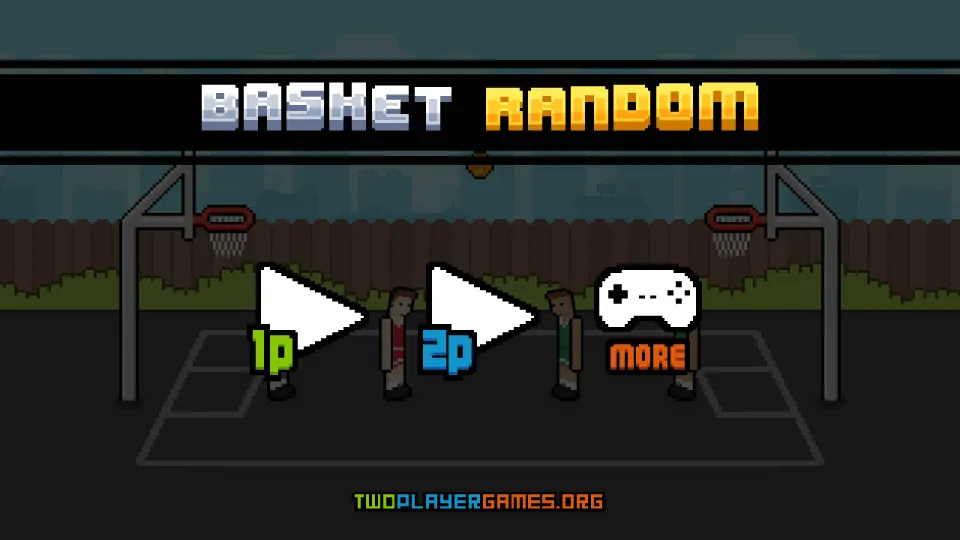 Click to play — free via gamemonetize
 Win the rebound: the second jump off a missed shot scores far more baskets than the original attempt ever does. Play to the body type each round assigns you, finish close to the rim during heavy-ball rounds, and once you have read your rival's jump rhythm, jump a half-beat later to block for free.
Basket Random hands each team a single button and dares you to build an actual basketball game out of it. The ragdoll flailing looks like pure luck for the first match or two, but underneath the comedy there is a readable structure: rebound timing, body-type matchups and round-by-round adaptation decide far more games than randomness does.
These tips are written for the shared-keyboard duel — one player on W, one on the up arrow, first to five — though every idea here works against the computer too. Pick up two or three at a time; stacking all of them at once is how tips become noise.
What your one button really does
Your entire team answers to one key, and context decides what the press means: near the ball it jumps, with the ball it shoots, in a crowd it elbows for position. New players mash and hope. The upgrade is treating each press as a decision with a purpose — a jump to meet the ball at its highest point, or a shot released while your ragdoll's arms are actually above the rim. Watch what your athlete does on two or three presses in a row and you will start feeling the tiny delay between input and action. That delay is where all one-button skill lives: the winner is not whoever taps fastest, it is whoever presses half a beat before the moment that matters.
Rebounds are the real scoring shot
Here is the pattern most opponents never notice: the first shot at the hoop rarely scores, but the ball bounces off the rim in predictable ways, and the player who jumps second — meeting the rebound at its peak — scores far more often than the player who took the shot. So stop treating a missed basket as a failed possession. It is the setup for the real one. As soon as the ball leaves anyone's hands, drift toward the rim and prepare your jump for the carom rather than ball-watching. Against mashing opponents this single habit wins matches outright, because they will keep shooting while you keep collecting the leftovers and dropping them in.
Play the body type you are dealt
Each round reshuffles your athletes: sometimes tall and wiry, sometimes short and stocky, sometimes a bouncing beanpole. Fighting your body type is the fastest way to lose a round. Tall lineups own the airspace — camp the rim, block with your height, and let the opponent beat themselves against your reach. Short lineups lose jump battles but get to loose balls faster, so your game becomes ground pickups and quick putbacks after rebounds. The lanky middle builds do a bit of everything and reward standard play. Take two seconds when the round loads to ask one question: is my team an airspace team or a floor team? Then commit to it for the whole round instead of pretending every round is the same.
Heavy-ball rounds belong to the paint
When the round hands you a heavy ball, deep shots stop being shots — they are lobs that die halfway to the rim. The adjustment is geographic, not technical: walk your ragdoll under or beside the basket and score from point-blank range where even a heavy ball drops cleanly. Defensively the same logic applies in reverse, because a heavy ball off the rim drops like a stone and gives your tall opponent an easy putback — so during heavy rounds, boxing out matters double. The rounds feel like a gimmick the first time and like a chess clock the fifth time: whoever adjusts their shooting range first takes the round, and whoever does not donates two easy points.
Read the rhythm, then jump late
Because everyone runs a one-button jumper, opposing players settle into a shooting rhythm without realizing it — the same windup, the same beat, possession after possession. Once you spot the cadence, blocking becomes almost rude: jump a half-beat after they commit and your ragdoll arrives exactly as the ball leaves their hands. The trick is patience for one full possession while you calibrate. Do not react to their first jump; react to the second identical one. Against human rivals this read also has a psychological tail — once you block them twice on the same rhythm, they start hesitating on every shot, and a hesitant one-button player is already beaten.
Courts change, geometry changes with them
The courts rotate between wide gyms and cramped pixel-art playgrounds, and the room you get should bend your shot selection. Tight courts shrink the distance to the rim, which turns every possession into a rebound scramble — expect contact, value position over accuracy. Wide courts restore the value of a clean deep heave, especially against tall defenders who take time to cross the floor. The balls mutate too: normal, heavy, or occasionally a bouncing beach ball that floats long enough for a second jump. You cannot pick any of this, but you can stop being surprised by it — glance at court width and ball weight during the round intro, then commit to the matching plan before the first tip-off.
Managing the race to five
First to five baskets takes the match, and five is a psychologically strange number: leads evaporate in one weird round and underdogs come back in two. So manage the arc. When you lead 3–1, tighten up — take the high-percentage close shots and make your rival beat you with Hail Marys. When you trail, do the opposite: hunt steals and rebounds, accept ugly offense, and force the chaotic possessions where one-button randomness favors nobody. And after any round where the physics did something absurd, take the breath — the match resets to a jump ball, not to your frustration. Tilt losses in this game are real, and they are the only losses that are entirely your fault.
FAQ
How do you win at Basket Random?
Why do the players flop around so much?
Is there a single-player mode?
Related guides
 1P/2P
1P/2P