
Moto X3M Pool Party Guide: Water Physics, Slides and Summer Stars
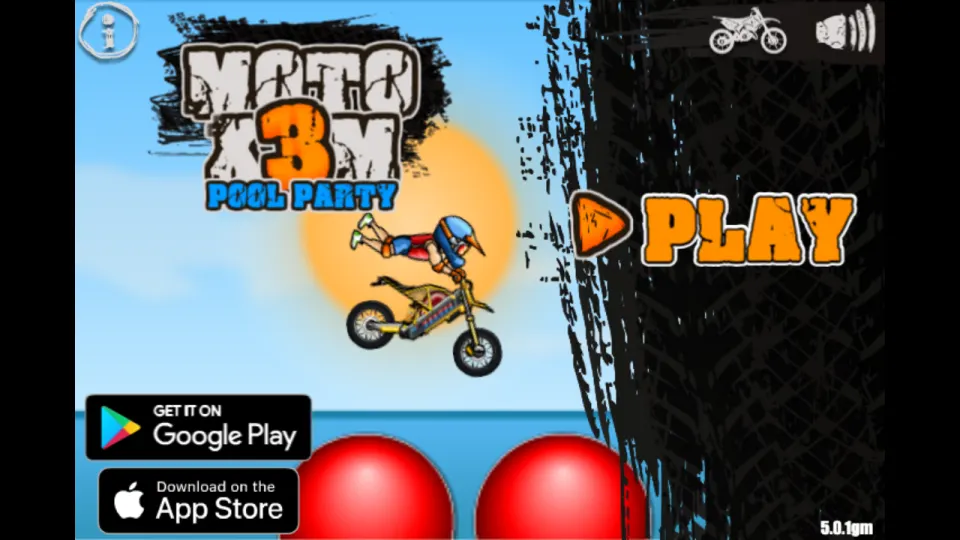 Click to play — free via gamemonetize
 Treat water as slow, grabby ground and land nose-up after every soaking jump. Ride slides at full commitment — braking mid-slide is how crashes happen. Let pool floats finish their delayed bounce before flipping for the time bonus, and clear each summer course once before hunting stars, because the thresholds here are friendlier than they look.
The water park is the newest arena for Moto X3M: slides instead of ramps, floats instead of flat ground, and enough pooled water to make every landing a small physics exam. The formula is intact — full throttle, fixed hazards, instant checkpoint respawns — but the summer pack's surfaces behave differently enough to punish riders who bring only their dirt habits.
This guide is about those differences. If you already ride the original campaign, treat everything here as the delta: what water does to your wheels, why slides forgive nothing, and how the float bounce timing works. Brand new to the series? Clear a few original levels first, then come back — this pack assumes you can already land a flip.
What the summer pack actually changes
Underneath the beach balls and lifeguard towers, this is the same engine as the mainline game: fixed-timing hazards, checkpoints, a timer that never stops, and a time refund for every completed rotation. What changes is the ground rules. Water replaces dirt as the default surface, so acceleration, braking and landing behavior all shift. Slides replace a large share of the traditional ramps, which changes how you build speed — you no longer control the launch, the slide does. And inflatable obstacles give landings a delayed, springy quality the original never has. The mistake new arrivals make is treating these as cosmetic swaps. They are surface physics, and each one has a specific counter that this guide covers in turn.
Water is a surface, not scenery
The pools scattered through the courses are rideable, and they are the single biggest adjustment in the pack. Water drags on both wheels: the bike decelerates faster, steering input lands later, and — the part that ends runs — a nose-down touchdown digs the front wheel in like soft sand. So the rule for every jump that ends in or near water is to arrive nose-up: a touch of backward lean held through the descent, rear wheel kissing down first, front wheel arriving late and light. The same logic applies on takeoff from shallow water. Your exit speed off a puddle is lower than your entry speed, so plan jumps from water as if the ramp were slightly shorter than it looks.
Slides reward total commitment
The water-park slides are the pack's signature sections, and they run on one law: speed is stability. At full throttle your bike presses into the slide's curve and follows it like a rail; the moment you brake, the rear wheel lightens, the line wanders, and the slide spits you into whatever the designers parked below. So the discipline is entry discipline — read the slide's shape while you approach, decide that you are committing, then keep the gas pinned until you are out the other end. The corollary matters just as much: never stop halfway down a slide to wait out a hazard. Momentum is what keeps you glued to the surface, and a stalled bike on a curved slide is not a waiting room, it is a crash with extra steps.
Floats: the delayed bounce is your flip window
Pool floats — the rings and inflatables scattered through the courses — bounce on a half-beat delay. The wheel sinks in, the float compresses, and only then does it return the energy, popping the bike upward a moment after contact. Riders who expect a trampoline response flip too early and waste the launch; riders who understand the delay wait out the sink and use the true bounce. That second group gets a free rotation almost every time, because the pop is high, predictable and repeatable — the perfect window for banking the flip bonus. Practice the timing on the early float sections: land, count the half-beat, then commit the lean. Once the delay is in your hands, float lines stop being hazards and become the most reliable launch pads in the pack.
Big air over water is free time
Summer courses hand out airtime generously: long ramps over pools, tall launches off slide exits, gaps sized for spectacle. All of that hang time is an invitation, because a completed rotation still pays the same time refund it does everywhere in the series — and the summer pack gives you more margin than anywhere else to cash it. The math to internalize: if a jump gives you enough airtime for one full flip, the flip is free; if it gives you enough for two, you are leaving time on the table unless you double. What the theme adds is opportunity — the launches here are taller and the landing zones wider than the original's, so the windows are easier to hit. Start the lean early in the arc, finish the rotation with room to spare, and set the wheels up straight for the descent.
Stars: clear the course first, hunt second
The three-star time thresholds in this pack are notably friendly, which changes the correct order of operations. On a demanding campaign, star runs demand optimization from the first attempt; here, a clean, careful first completion usually lands within reach of three stars already, and the second pass collects them. So ride each new course once for survival — learn where the slides turn, which floats bounce, where the water sits — and ignore the clock entirely. On the replay, add the free layer: every rotation you skipped out of caution, every hesitation before a slide entry. Between those two passes the summer pack is one of the fastest places in the series to build a star count, and a tidy star count travels well across the whole family of games.
Controls refresher: keys and touch
Desktop riding runs on four inputs: the up arrow for gas, down arrow for brake, left and right to lean the bike through rotations and landings, and the space bar to respawn at the last checkpoint the moment a run goes wrong. That respawn key is part of the intended loop, not an admission of defeat — instant retries are how the fast lines get found. On touch devices the layout mirrors the keyboard: dedicated gas and brake buttons, lean arrows for mid-air control, and a respawn tap that deserves the same corner of your attention. The one habit worth transferring between devices is the nose-up discipline on water landings described above; it is slightly harder to feather on a touchscreen, so consider playing the float-heavy levels on desktop first and saving mobile sessions for replays.
FAQ
Is the summer pack a full game or a demo?
How is it different from the original Moto X3M?
Does it work on mobile?
Related guides

 1P
1P