
Moto X3M Winter Guide: Ice Grip, Gift Crates and Rider Unlocks
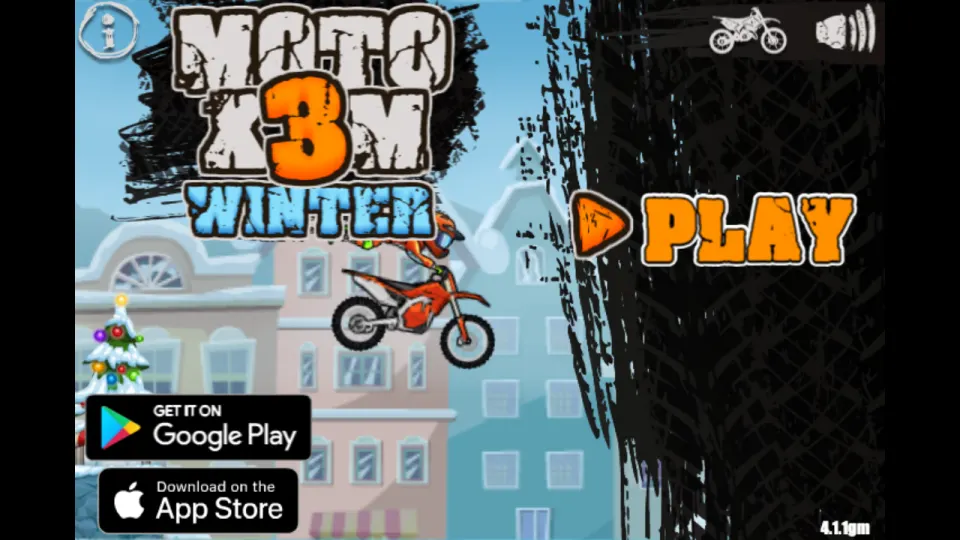 Click to play — free via gamemonetize
 Straighten the bike before every landing, because ice punishes mid-air corrections at touchdown. Ease off the gas ahead of explosive crates so the blast cannot fold the bike, and never gamble on a rotation you cannot finish — an interrupted flip costs more than it pays. Farm the early stages for stars; they unlock new riders for the rest of the campaign.
Moto X3M Winter wraps the stunt-bike formula in snow, and it is widely considered the kindest entry point in the family: the hazards are familiar, the courses read clearly, and the ice asks for exactly one new skill — respecting reduced grip. You ride the same dirt bike through frozen chasms, saw blades and crates in gift wrap that should be your first warning.
This guide covers what winter actually changes for your riding: how ice edits your landing rules, why the explosive crates deserve a throttle plan, and how the star economy here pays out extra riders. Never touched the series? This is a fine place to start. Banked stars elsewhere? This pack will feel like a friendly remix.
What Winter changes about the riding
The engine is identical to the rest of the series: fixed hazards, instant respawns, a timer that never pauses and a time refund for every finished flip. What the snowpack edits is grip and the price of sloppiness. Icy stretches shorten braking, lengthen slides, and turn slanted touchdowns treacherous in a way dirt never is. The scenery is cheerfully seasonal — snowmen, lights, presents — but the presents deserve suspicion, because some of them explode. None of this makes Winter harder than its siblings; most riders find it gentler. What it does is expose bad habits: overcorrection and lazy landings that dirt forgives become crashes here, and fixing them makes every other pack in the family easier too.
Ice demands straight landings
On dirt, a slightly crooked touchdown scrubs a little speed. On ice, it starts a slide you do not control. So the winter landing rule outranks everything else: square the bike up before the wheels touch. That means finishing your leans earlier in the airtime — rotate through the flip, get the frame level, and spend the last stretch of hang time doing nothing but holding steady. It also means choosing landing spots with a straight run-out, because even a perfect touchdown on ice needs a few bike-lengths of settled ground before you ask it for steering or gas again. Riders arriving from the original will feel the difference most on sloped landings, where the old habit of touching down at an angle now costs a crash instead of a wobble.
Steep descents: lean back and stay calm
Winter's icy slopes are where front wheels go to betray their riders. The failure is always the same: momentum carries the bike down a long white hill, the front wheel catches an edge or a lump, and the rider sails over the bars into a respawn. The counter is a settled backward lean through the whole descent — keep weight off the nose by holding a touch of lean for the duration, not just at the start. Resist the instinct to brake hard; on ice the rear brake mostly just reduces what little control you had. Let the hill do the accelerating, steer with patience, and treat every descent as a landing that has not happened yet: the goal is to reach the bottom with the bike level and the front wheel light.
Gift crates: plan the blast
The exploding presents scattered through the campaign are the pack's signature hazard, and they reward a throttle plan rather than courage. The blast knocks a bike at full gas sideways; a bike arriving gently rides it out. So the technique is to ease off the accelerator just before contact — not to a stop, just off full — hold the frame level, and let the explosion spend itself under you while you coast through. Timing matters more than speed here, and the crates telegraph well: if you can see one ahead, you have the time to set up. The same read applies to chains of crates, where the trap is panicking after the first blast and grabbing throttle too early. Ride the chain like one continuous soft-throttle section and it collapses into routine.
Finish the rotation or skip it
Flips remain the series' currency — every completed rotation refunds half a second — but winter adds fine print: a rotation interrupted by the ground is worse than no rotation at all. The half-flip that ends in a crash costs you the time bonus, the crash time and your rhythm, three debts for one bad decision. So the winter standard is completion confidence: only start a lean when the airtime ahead clearly supports a full rotation, and if a bounce surprises you, abandon the rotation early and level out instead of gambling on the landing. On the generous early jumps, practice counting the rotation's end until the final quarter-turn feels automatic. Riders who only ever start flips they can finish lose less time to ice than riders who flip on hope.
Stars pay out riders, not just bragging rights
Winter's progression hook is worth knowing before you plan a session: the stars you earn per stage are not decoration — they bring new riders into your roster, ready to take onto any course. That turns star collection from an endgame vanity project into the actual progression system, and it changes where you should farm. The early stages hold the friendliest stars in the pack: short courses, forgiving thresholds, hazards you will already know from the rest of the series. Replay them once you are comfortable, ride smooth rather than spectacular, and the roster fills out faster than grinding the late campaign would manage. Once a new rider is unlocked, take them back through levels you have already cleared — same physics, fresh paint, and a fine excuse to revisit the snow.
Smooth beats fast on the three-star lines
The three-star thresholds in this pack reward consistency more than heroics, which surprises riders expecting a winter difficulty spike. A run with one crash and one spectacular recovery is slower than a slightly boring run with no drama, because every respawn burns seconds and every risky line risks a restart. So build your star attempts the boring way: ride each course once to learn its rhythm, then replay aiming to touch nothing — no crashes, no saves, no mid-air heroics beyond the rotations you know you can land. Brake earlier than feels necessary on ice, take the wide line through slopes, and let the flip bonuses accumulate rather than chasing them. The tidy runs post better times than the highlight reels, and they post them on the first or second attempt instead of the tenth.
FAQ
Is Moto X3M Winter its own game or a reskin?
What do stars unlock?
Can I play it on a phone or tablet?
Related guides


 1P
1P