
Fireboy and Watergirl: Forest Temple — Complete Co-op Guide
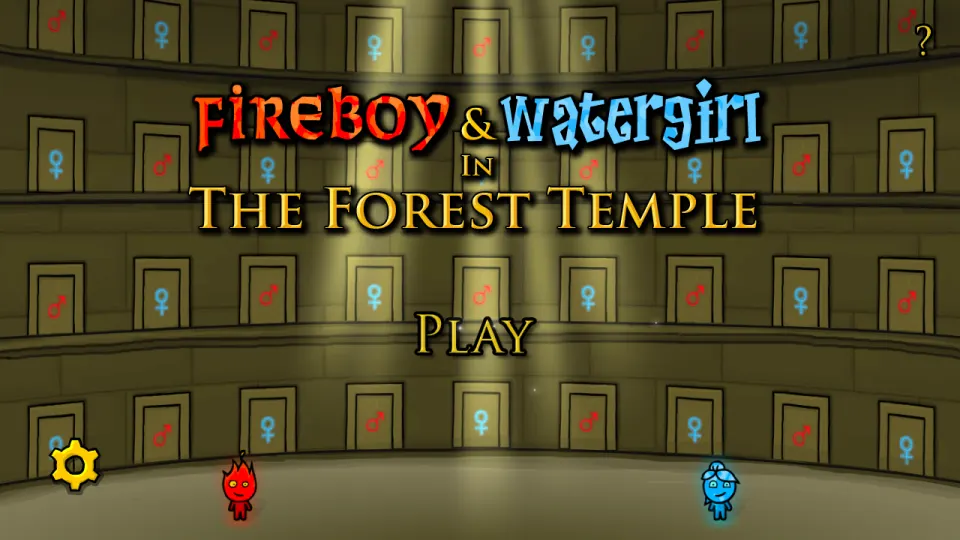 Click to play — free via gamemonetize
 Collect the element-matched diamonds first, keep each hero clear of the other's deadly liquid, and never touch the green goo as either character. Park one hero on levers while the other crosses, and only exit when both stand at their own shaped doors at the same time.
The Forest Temple is where browser co-op was born, and its rules are brutally clean: the fire hero swims in lava and dies in water, the water hero does the exact opposite, and the green goo in between kills them both. Every room is built on that triangle. If your runs keep ending with one hero dissolving five seconds from the exit, this guide will fix the habits that cause it — route order, lever etiquette and the discipline of announcing your moves.
It works for both ways to play: two people sharing one keyboard, or a solo player juggling both heroes. The mechanics sections apply to everyone; the communication sections are for duo play, where nine out of ten deaths are actually miscommunication wearing a hazard costume.
The three liquids: learn what kills whom
Every hazard in the temple is one of three pools, and the rules never bend. Red lava pools are safe lanes for Fireboy and instant death for Watergirl. Blue water pools reverse that — Watergirl crosses freely while Fireboy evaporates on contact. The green goo is the third rule and the one that ends most friendships: it kills both heroes, every time, with no exceptions and no close calls. Reading a new room therefore starts with a ten-second survey: where are my safe lanes, where are my partner's, and where is the no-go green. New players route each hero greedily toward gems and discover the geometry too late. Route the pair as a system — Fireboy's path and Watergirl's path should cross hazards deliberately, not accidentally.
Controls split: arrows versus WASD
On one keyboard the heroes split cleanly: Fireboy answers to the arrow keys, Watergirl to A, W and D, and the R key resets the room instantly when a run goes wrong. The split is genuinely ergonomic — the two hand positions never fight for space, which is why this game defined shared-keyboard co-op. Two habits make it smoother. First, each player owns their keys completely; reaching over to 'help' almost always walks your own hero into something lethal. Second, agree upfront that either player can call for an R reset — a fast shared restart beats five seconds of arguing about whether the run is salvageable. On touch screens each hero gets a directional pad and both are live at once, so a phone or tablet flat on a table works as a two-person arcade cabinet.
Diamond order: gems first, doors second, out loud
Each room hides red diamonds for Fireboy and blue diamonds for Watergirl — a hero who grabs the wrong color simply passes through, so the split matters. The reliable sequence is: sweep all diamonds, then converge on the doors. The failure mode is classic: one hero reaches the exit early and waits while the other hunts the last gem, pressure builds, someone gets greedy, and a death resets the whole room. The fix is procedural, not skillful. The gem-hunter announces 'last one, coming to you', the waiter holds position, and the doors open only when both heroes stand on their own shaped panels simultaneously. A room is not finished when the gems are collected — it is finished when both players are standing where they agreed to stand.
Levers and platforms: someone has to be the weight
Most transport in the temple — moving platforms, rising elevators, temporary bridges — runs off levers and pressure plates that only work while a hero stands on them. That creates the core co-op pattern of the whole game: one player becomes the weight, holding a lever so the other can ride, collect or cross. Decide out loud who is parking. The classic disaster is both players stepping off a lever 'just for a second' to grab a nearby gem, dropping the platform, and stranding the partner over a pool of goo. When a puzzle looks impossible, ask the lever question first: whose weight is holding this, and what happens if they let go? Half the temple's tricks are simply noticing that the answer is 'you, forever, until your partner signals'.
Element slides and one-way rides
The temple's slides are element-locked: the fire slide liquefies into a safe chute for Fireboy and a death trap for Watergirl, and the water slide mirrors it. Treat every slide like a liquid — check which element it burns with before anyone touches it. The rides also tend to be one-way commitments; a hero who slides down often cannot climb back, which strands the room's lever-weight and forces an R reset. So the rule for slides is the same as for levers, stated backward: before anyone rides, confirm the partner does not currently need you standing still. Combined with moving platforms, slides form the temple's trickiest traffic patterns, and rooms that mix the two reward a slow first read over three fast failed attempts every time.
Playing solo: you are both heroes now
Single players run the temple by switching attention between heroes instead of sharing a keyboard, and it changes the rhythm more than the difficulty. The core technique is parking: move one hero to a safe, boring spot — on a lever, beside a pool — then run the other through their entire leg of the route, and swap. Think of each room as two half-routes stitched at parking points. The mistakes to avoid are greedy ones: never leave a hero mid-slope or beside an active hazard 'just for a moment', because the room state does not pause while you drive the other character. Solo play is also the best way to learn a brutal room's layout before bringing it to a two-player session — you will know both halves of the puzzle when it is time to shout about them.
Duo play: callouts, roles and blame-free retries
The difference between a good duo and a loud one is narration. The moves that need saying: 'I'm holding the lever', 'I'm going for my last gem', 'slide is fire-safe, you're up', 'meet at the doors'. Thirty seconds of chatter saves whole minutes of reset loops. It also helps to assign standing roles per room — one player reads the layout and calls the route order, the other executes — and swap roles room to room, because the reader's job is genuinely the harder one. When someone dies, and everyone dies in this game, the reset is instant and blame is optional; the only useful sentence after a death is what to change, not whose fault it was. Couples and siblings have ended friendships over green goo. Do not be that duo.
Boss rooms and the twin-door finale
The temple saves its most theatrical rooms for last: larger chambers where both elements are needed at once, hazards that alternate between lava and water on timers, and the signature finish — two exit doors that only open while each hero stands at their own panel. The pattern for these rooms is patience at three speeds. Read the whole room before moving anything. Run the heroes' routes in alternating legs with deliberate parking. Then make one clean collection pass before anyone touches a door. The rooms look like boss fights but they are purity tests for the habits in this guide: element discipline, lever communication and simultaneous finish. A duo that calls their moves clears the finale in one or two attempts; a silent duo supplies the temple with victims.
FAQ
Is solo play possible?
What does the green liquid do?
How do the exit doors work?
Who created Fireboy and Watergirl?
Related guides


 2P
2P